Most cities treat pothole season as something that happens to them in February. Chicago is trying to get ahead of it in October.
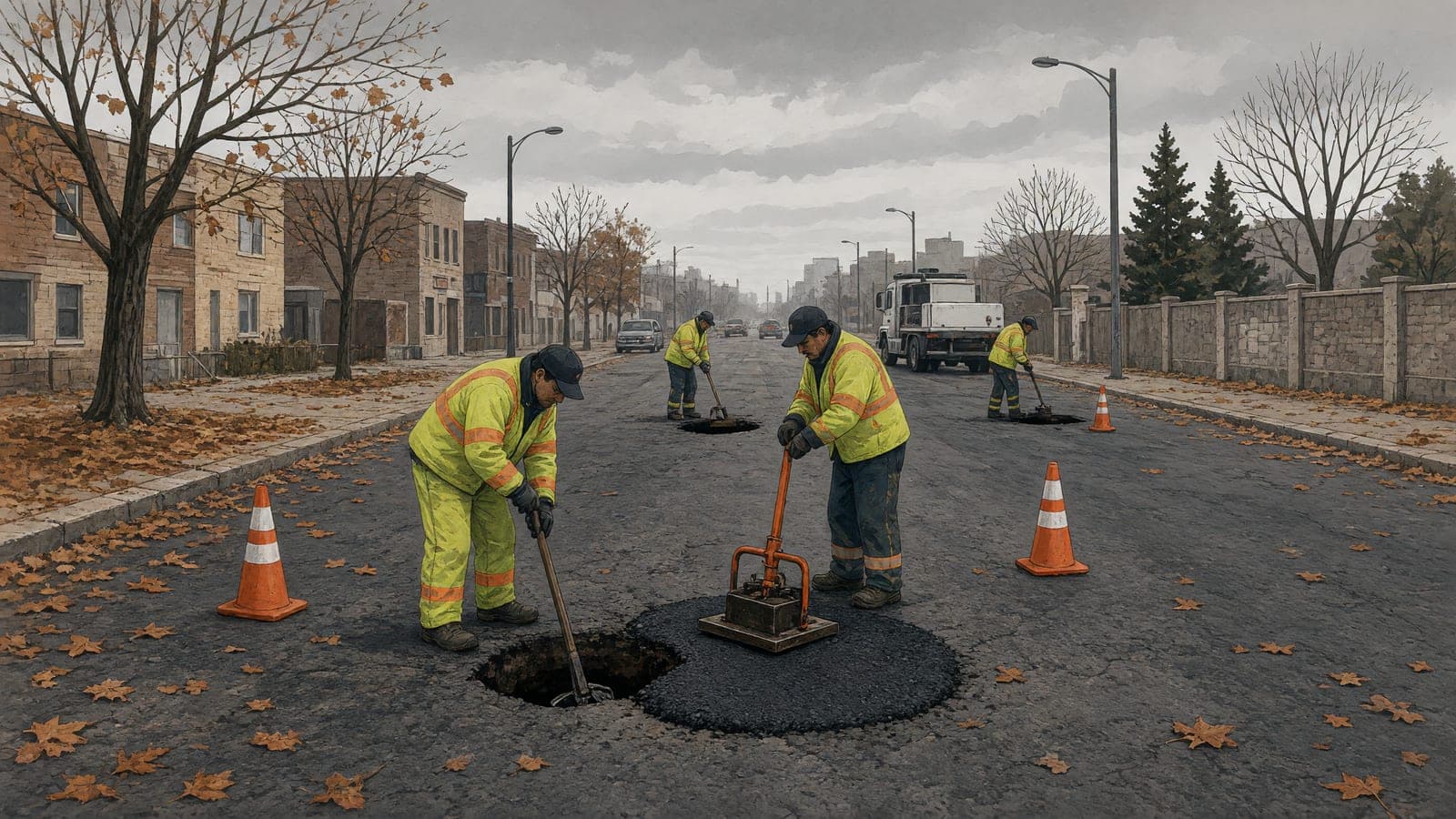
On Saturday, October 3, the Chicago Department of Transportation (CDOT) sent more than 30 crews into some of the city's hardest-hit areas for a second straight weekend pothole blitz. The city said the push came as Chicago surpassed 330,000 potholes patched so far in 2026. The Saturday before, crews filled nearly 5,600 potholes in a single day, and the city set a goal of more than 5,000 for the follow-up, according to the Chicago Sun-Times.
Why a fall blitz makes sense
Winter is normally CDOT's busiest stretch, with crews working seven days a week. The fall blitzes put extra crews on the street to clear outstanding repair needs before freeze-thaw cycles start working on every open crack and loose edge. Mayor Brandon Johnson framed the effort as preparing "our streets for the winter months ahead," adding that every pothole filled "makes our streets safer and more accessible for the people who rely on them every day."
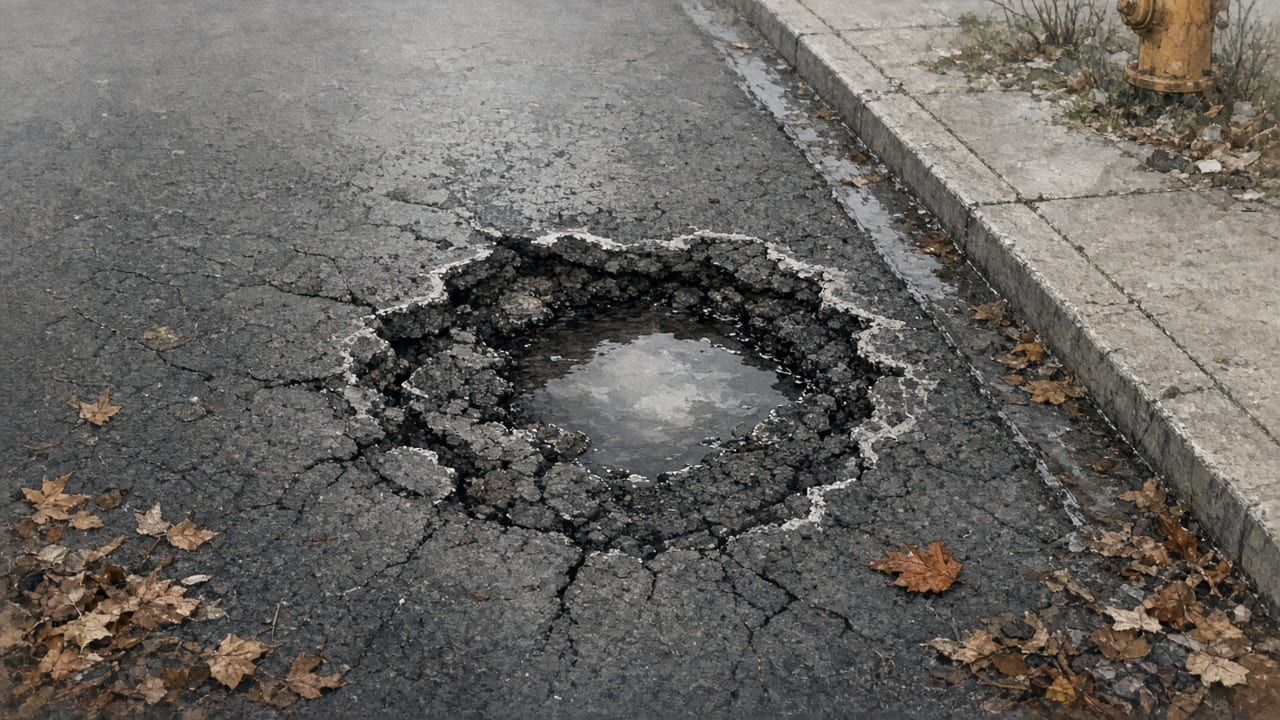
That's the right framing. A pothole left open into December isn't a static defect. Water gets in, freezes, expands and loosens the surrounding pavement. Traffic does the rest. Catching defects in milder fall conditions, when crews can clean, shape and compact properly, gives every repair a better chance of lasting.
Volume is the headline. Durability is the story.
330,000 is a big number. It's also a reminder of how much repair work a large city absorbs in a single year, and how much of it can turn into repeat work. Independent tracking of city 311 data by Transparent.city found 33,381 pothole complaints citywide through September 29, up 39.6% from the same window of 2025. More complaints mean more fills. The real question for any agency is how many of those fills will need a second visit.
CDOT is pairing patching with longer-term work. The city says more than 100 miles of streets and alleys have been resurfaced this year, with paving continuing through the fall. Resurfacing is the long-term answer for worn-out streets. Patching keeps the network safe until the paver arrives.
What happens in between is where material choice matters. A fill that loosens after the first hard freeze gets counted twice: once in October and again in March. A repair that bonds well, compacts tight and holds up through temperature swings drops off the list for good.
What other cities and property owners can borrow
Chicago's approach offers a playbook that scales down to a small town, a campus or a commercial lot:
- Do a fall sweep. Inspect and fix before the first freeze, not after the first complaint.
- Target the worst areas first. CDOT focused its blitz on areas with the greatest need, which is where both safety risk and repeat failures tend to concentrate.
- Make reporting easy. Chicago takes reports through 311, the CHI311 app and 311.chicago.gov. Good data lets crews plan routes instead of chasing calls.
- Choose repairs designed to endure. A blitz only pays off if the work survives the season it was meant to prepare for.
That last point is where EZ STREET® Ambient® Asphalt fits. It's a ready-to-use, engineered asphalt that bonds to asphalt and concrete, is formulated to work even in wet holes, and is ready for traffic as soon as it's placed and compacted. Because it can be stockpiled for months without losing effectiveness, crews and facility managers can keep material on hand for a fall blitz and for the January call that comes in after a thaw.
The winter test
Chicago's crews will find out over the next few months how their fall work holds. Every repair that's still smooth in March is one fewer crew trip, one fewer damaged tire and one less frustrated neighbor. That's the measure that matters for any city: not just how many potholes get filled, but how many stay filled.
For agencies and property managers planning their own pre-winter push, thermally resilient, performance-proven materials such as Ambient® help turn a big repair count into repairs you can count on. Learn more at ezstreetasphalt.com.
Source notes: City of Chicago Office of the Mayor (Oct 3, 2026); Chicago Sun-Times (Oct 3, 2026); Transparent.city (Oct 2, 2026).