


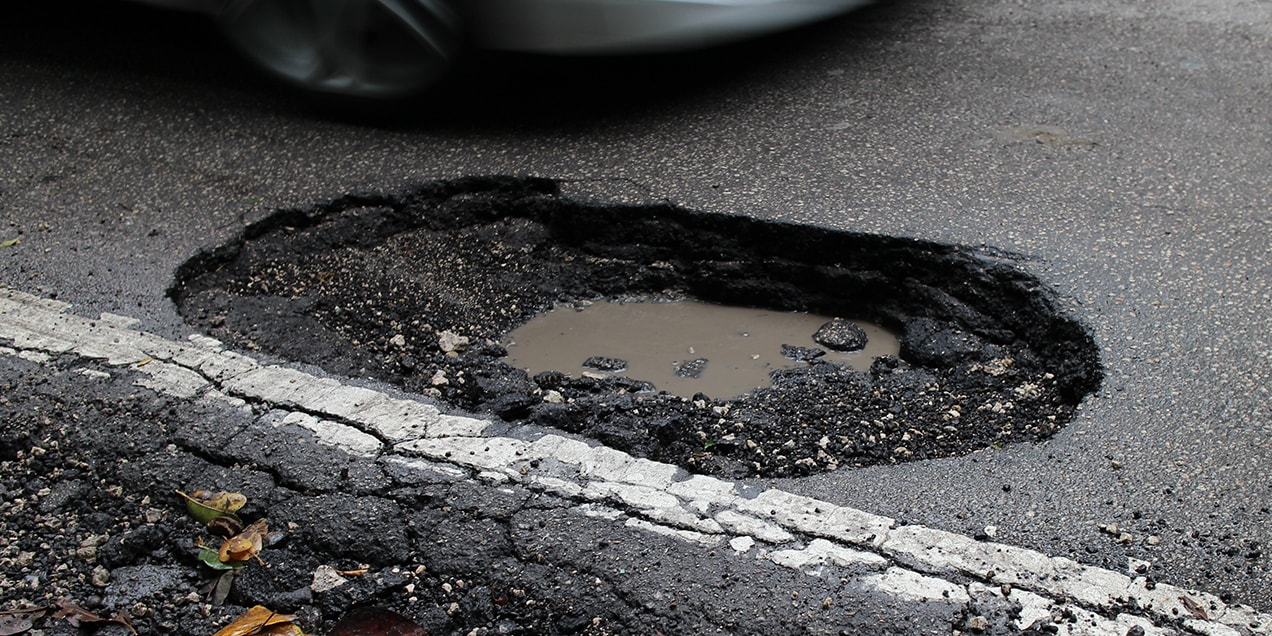
Salem, Ohio Pothole Once Famous, Now Fixed

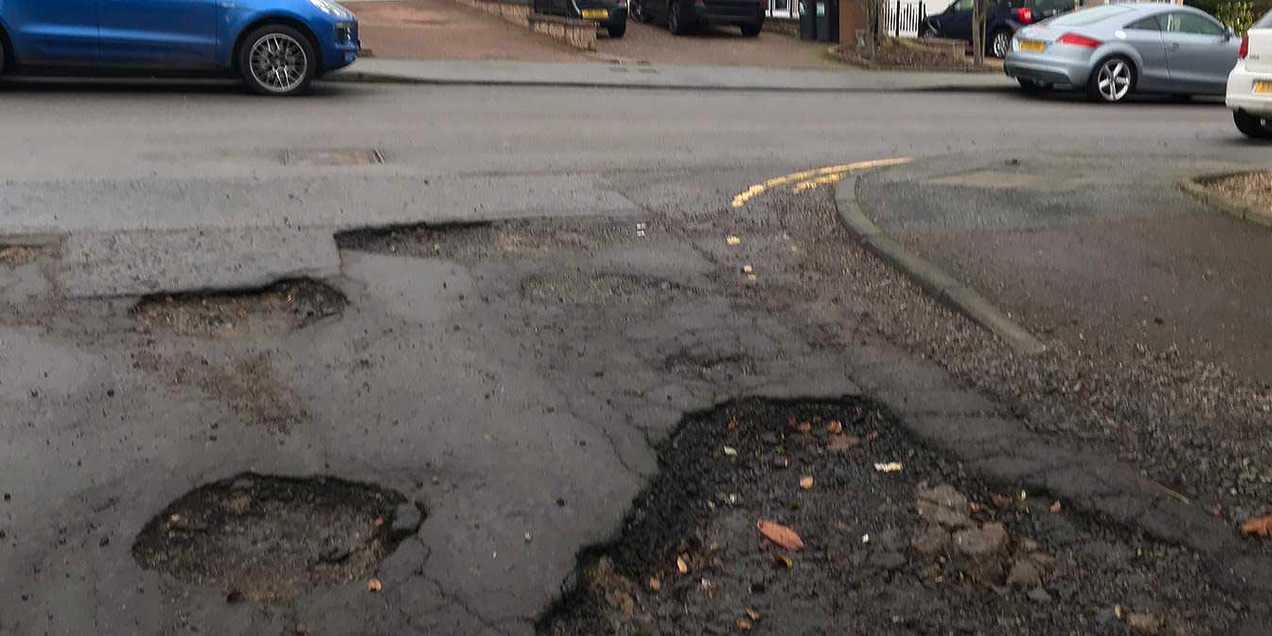
The way money is allocated in most cash-strapped cities, counties and townships across America, it often seems like a matter of splitting hairs. But the Butcher Road Pothole of 2011 in Columbiana County, Ohio really came down to splitting a road. All in the name of fiscal responsibility.

A brouhaha erupted in the summer, when a pothole plaguing motorists seemed to be getting bigger while it was officially ignored. Citizens complained to the city of Salem, which owned one side of the road, and Perry Township, which borders the city from the opposite side of the road. Apparently, where the precise dividing line fell – and in whose jurisdiction the pothole was located – was not absolutely clear.

Read More

Driving Tips to Avoid Potholes – And Rising Tire Prices

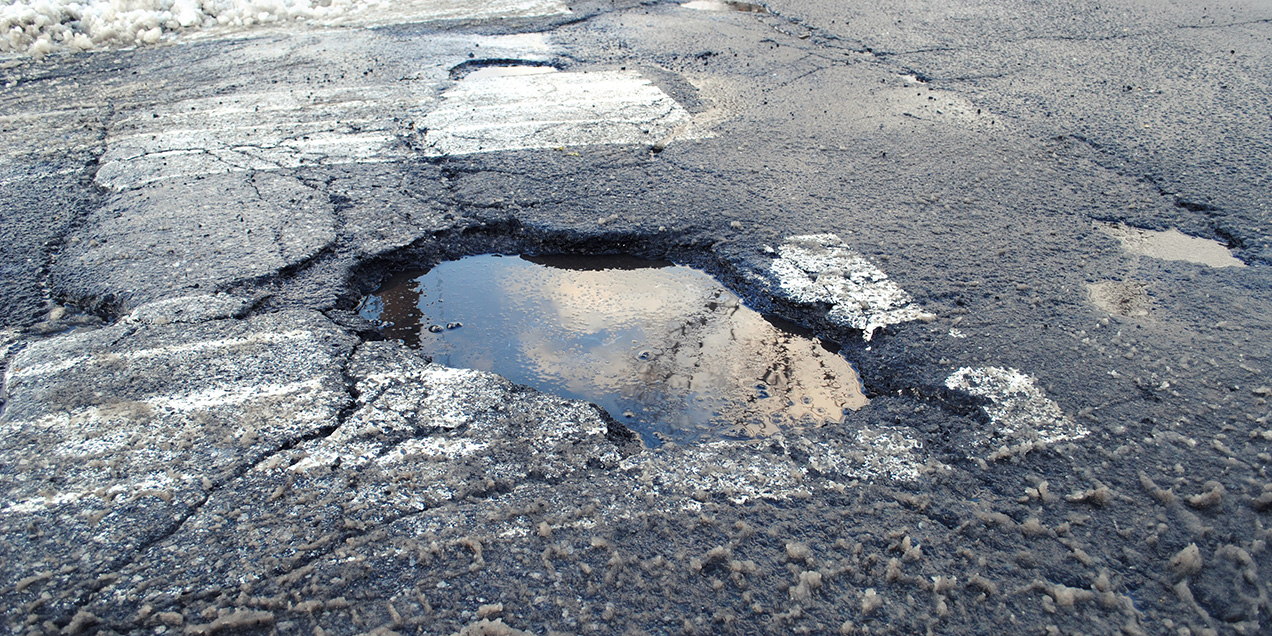
In case you didn’t like potholes in the winter of 2010-2011, there is a reason you’ll dislike potholes even more in the winter of 2011-2012.

Here’s why: Potholes destroy tires, and the price of tires is rising sharply due to a supply shortage of natural rubber (yes, it still comes from trees, mostly in southeast Asia) and increasing demand from China, where car ownership is undergoing double-digit growth. Petroleum is also used in tire manufacturing, adding further to cost volatility. Blow out just one tire on one pothole and expect to pay out more – one major tire manufacturer increased prices three times in 2011 alone.

Read More

NYC Mystery: Not a Pothole, a “Street Defect”

In a city like New York there is a subterranean world. Pet alligators once flushed down toilets are rumored to roam the sewers – an apocryphal tale – and the drinking water system is said to leak like a sieve (true, as it turns out).

There is evidence of secret tunnels in Queens connecting what once were two forts (Totten and Schuyler). “Invisible New York – The Hidden Infrastructure of the City” by Stanley Greenberg (Johns Hopkins University Press, 1998) and “Invisible Frontier: Exploring the Tunnels, Ruins, and Rooftops of Hidden New York,” by L.B. Deyo and David Leibowitz (Three Rivers Press, 2003) each treat these realms with respect, awe, fear and no lack of humor. The movie, In Search of the Mole People, documents an underground world of people squatting in the tunnels adjoining the subway system as a follow-up to the book, “The Mole People: Life in the Tunnels Beneath New York City” (Jennifer Toth, Chicago Review Press, 1995). Both revisit the theme created by a 1950s B movie, The Mole People (which includes a character played by Hugh Beaumont, who later starred as dad Ward Cleaver in the “Leave it to Beaver” television series).

Read More

Polymer-Modified Asphalt a “Game Changer” in Cold, Hot and Wet Conditions

In the widening gulf between municipal budgets and road pavement quality, is there any hope the roads will get fixed?

Every mayor in America – and Canada and much of the rest of the world – gets elected on a promise to fix potholes. But when elected officials settle into the executive suite they often find out they have about 30 cents available for every dollar needed to fix those potholes – and that putting off those repairs for three or four years will mean the math gets much, much worse. The pavement deteriorates exponentially over time while road maintenance budgets shrink.

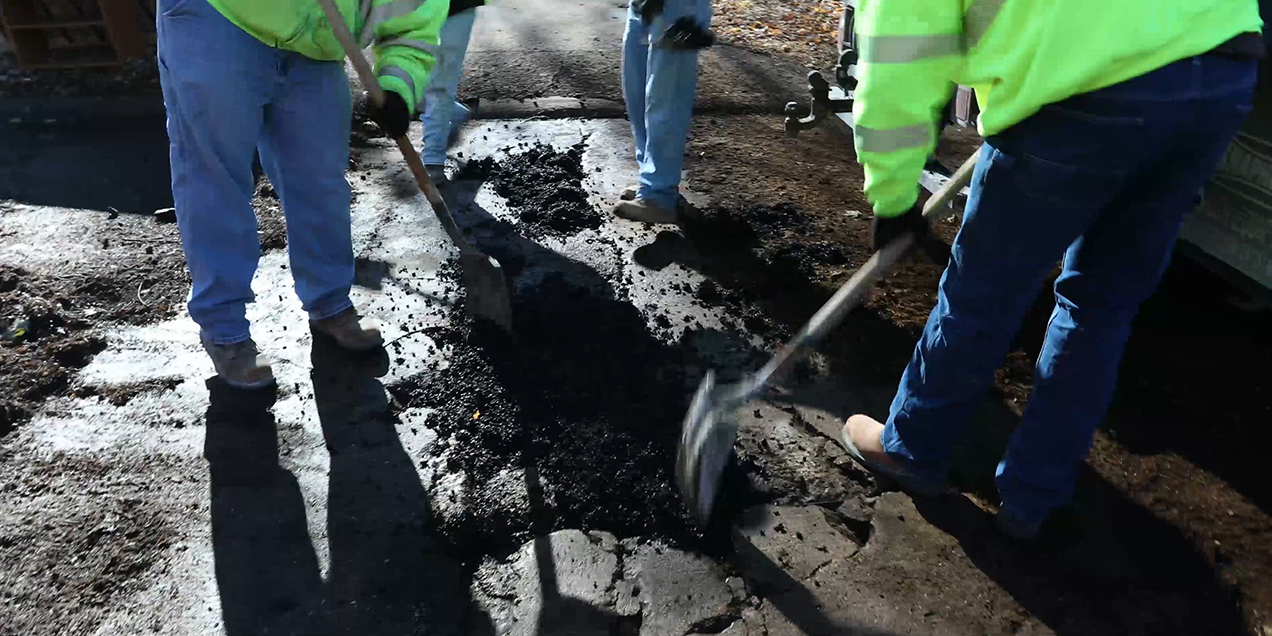
Making matters worse, the throw-and-go method of using hot mix has two additional deficiencies. One is that its use is restricted in cold and rainy conditions. The other is because a low-quality hot mix rarely lasts more than a few months. Reapplication of hot-mix in warmer months multiplies material and labor costs several times over. Meanwhile, those mayors and their departments of streets get an earful from dissatisfied citizens who have damaged cars and drive in slower traffic due to rough pavement.

Read More

Pothole Warning Graphic a Sign of the Times?

Some pictures are worth a thousands words. This one might save you a thousand bucks.

Technically speaking we’re talking about a graphic, not a picture per sé. It is a black silhouette (on an orange field) of a car is tipped into a crevice of broken pavement in such a way that the words “look out!” come to mind. It’s a pothole warning symbol, of the type that would be positioned on a road or highway to warn of rough pavement ahead. Its purpose is not too different from the universal language, no-words symbols used to warn us of curving roads, deer and falling rocks. Given how American motorists spend more than $400 per year, on average, to repair their vehicles from pothole damage, it can be a welcome warning in a world of deteriorating pavement.

Read More