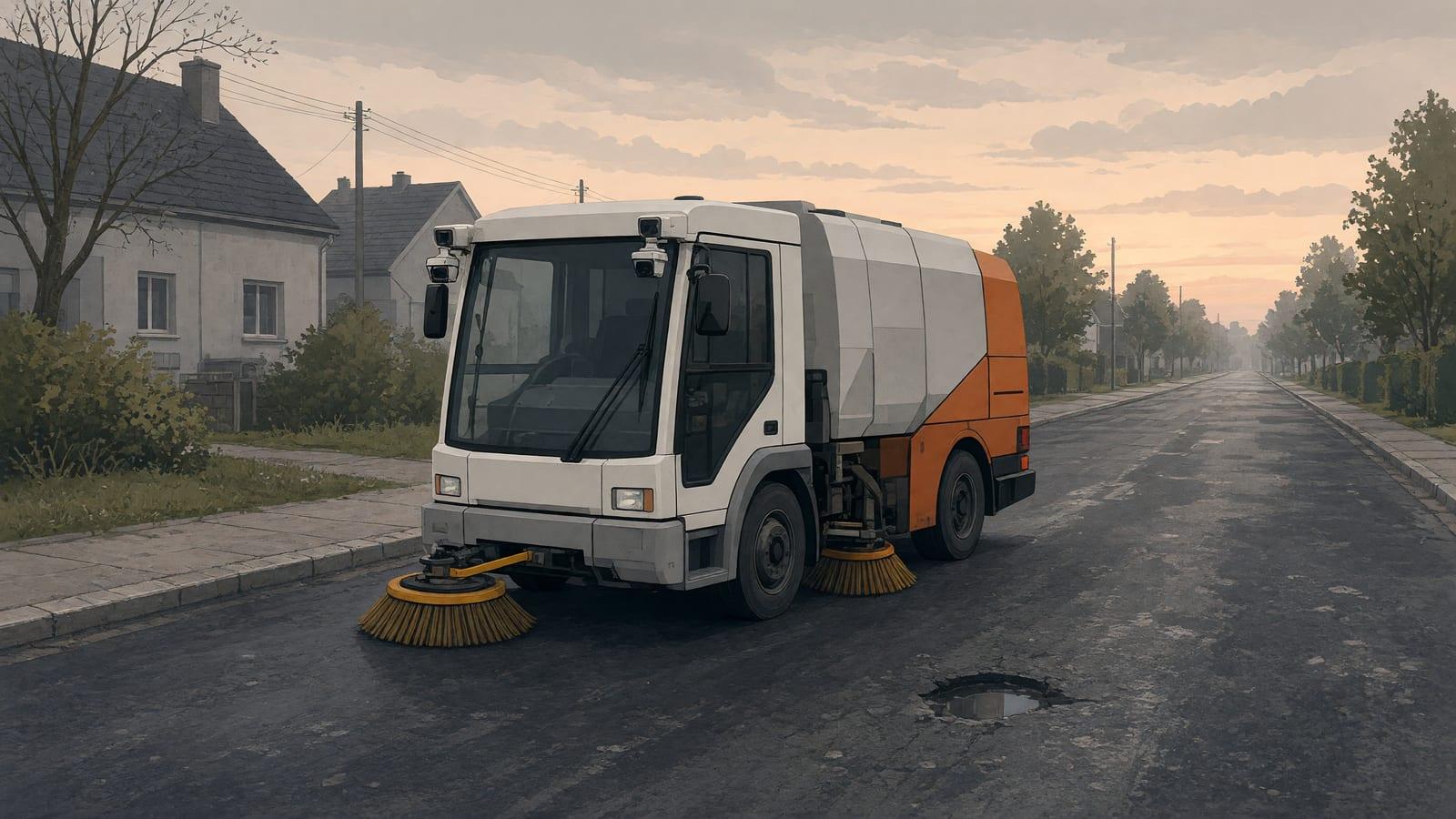
The City of Greater Geelong in Victoria, Australia, has found a new job for its street sweepers: spotting potholes. The council says it is the first in Victoria to use artificial intelligence and smart cameras to detect and measure potholes, according to ABC News.
How it works
Cameras mounted on two large street sweepers photograph potholes as the trucks drive over them. The system sends the pictures to road crews along with each hole's width and depth, so crews can work out how much material a repair needs before they arrive.
The council trialled the $7,000 program on the two sweepers starting in August 2025 and detected 1,600 potholes. Mayor Stretch Kontelj said the technology lets crews "attend to these pothole repairs when the holes are still small," and respond "in a really cost-effective way." The city hopes to expand it to garbage trucks and other council vehicles, and to use it for faded line markings, road sign faults, and missing drain lids. City CEO Ali Wastie said Geelong fixed more than 5,300 potholes last financial year.
The science of catching holes early
Potholes grow. Water gets into a small crack, traffic pumps it deeper, and the base underneath weakens. Each freeze, heavy rain, or passing truck makes the hole wider and deeper. A hole that takes a few kilos of material this week can need a full-depth repair in a few months.
That's why early detection matters so much. Vehicles that already drive every street, every week, are an ideal sensor network. They find holes before residents report them, and before they damage tyres and wheels.
Data tells you where. Material decides how long.
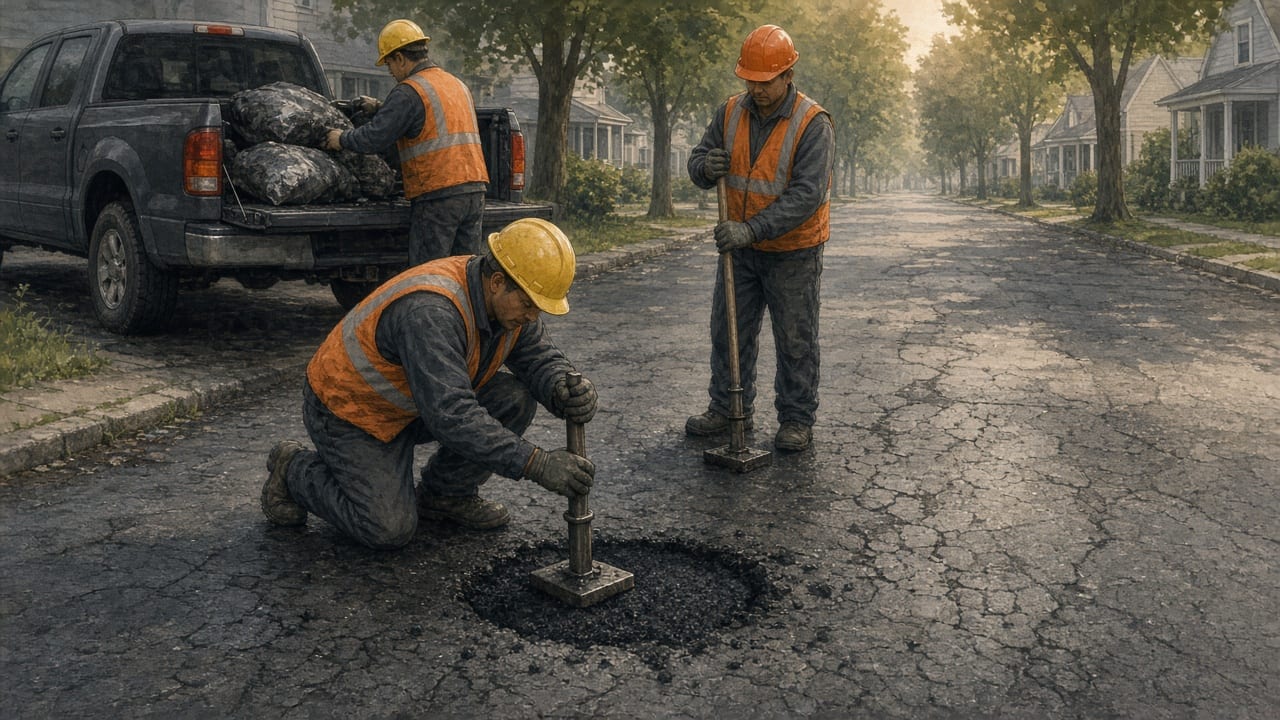
Knowing a hole's exact size is a big step. The next step is filling it with something that lasts. Small, early repairs are exactly where EZ STREET® Ambient® Asphalt shines: crews can carry it on the truck, place it straight from the bag, compact it, and open the road right away. It bonds to the surrounding pavement, handles damp holes, and stays thermally stable through heat and cold, so the repair holds instead of becoming the next detection.
Takeaways for councils
- Use the fleet you have. Sweepers and garbage trucks already cover the network.
- Send crews with the right amount of material. Measured holes mean fewer wasted trips.
- Fix early, fix once. Early detection pays off most when the first repair is enduring.
Geelong's trial shows smart technology doesn't have to be expensive. Pair it with engineered repair material and small holes stay small. Learn more at ezstreetasphalt.com.
Source notes: ABC News (November 5, 2026).