In Los Cabos, at the southern tip of Mexico's Baja California peninsula, the most important road repairs are happening while most people sleep.
After recent rains damaged streets across the municipality, the Los Cabos city government restarted an intensive pothole repair program in early October, beginning in Cabo San Lucas. Mayor Christian Agúndez Gómez inspected the work on Constituyentes Boulevard on October 7 and told crews to prioritize the most damaged roads and the reports coming in from residents.

"We are going to carry out mass pothole repairs across the whole municipality to restore traffic flow where it's needed most," he said, according to HOY BCS.
Why the work happens at night
Crews started on La Sanluqueña road and Constituyentes Boulevard, along with streets including Roca, Puerto Escondido, Nicolás Tamaral, Palma Abanico and Miguel Hidalgo. The Public Works department, led by Christopher Enríquez González, said the teams work overnight to limit disruption for drivers and public transit during peak hours.
By October 14 the program had reached the San José del Cabo–Cabo San Lucas tourist corridor, BCS Noticias reported. The corridor is the main artery between the municipality's two cities, used every day by workers, staff shuttles, taxis and visitors heading to the hotel zone. Closing lanes at rush hour would mean long backups, so crews work after midnight and before dawn, section by section, starting with the worst stretches.
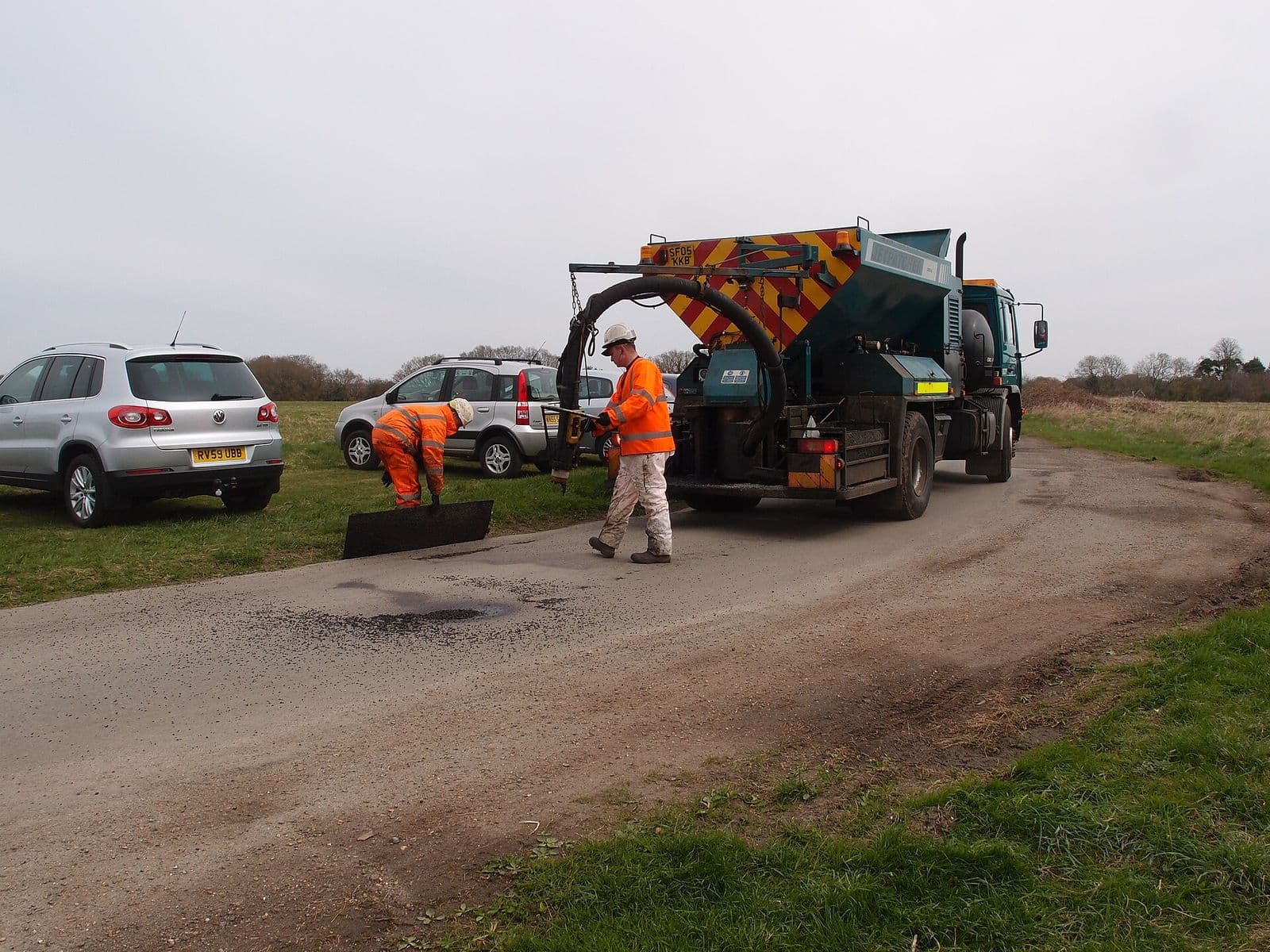
The city has also hired additional crews to widen coverage and added a patching machine that preheats the asphalt, sprays a prime coat and places the new surface, which officials say will make repairs faster and longer-lasting.
Short windows, high stakes
Night work is a smart answer to a common problem. On a road that carries a city's commuters and its tourism economy, the cost of a pothole repair isn't just the asphalt. It's the lane closure, the traffic management and the delay for everyone stuck behind it.
Night shifts shrink that cost, but they also shrink the working window. Crews have a few hours to get in, fix as many defects as they can and reopen the road before the morning rush. Any repair that needs extra time before traffic can return, or that fails and has to be redone, eats into a window that's already tight.
Rain adds another layer. BCS Noticias noted that the rainy season and storms such as Simon often open new potholes and widen existing ones. That means crews are often dealing with damp holes, sometimes with water still sitting in them.
Matching the material to the job
Big rehabilitation jobs, like the tendered rebuild of La Sanluqueña the mayor mentioned, need paving crews and heavy equipment. But around those jobs there are always scattered potholes on side streets and neighbourhood roads that need a fast, reliable fix.
That's where EZ STREET® Ambient® Asphalt fits. It's ready to use, with no mixing and no tack coat. It works even in wet holes, bonds to asphalt and concrete, and is ready for traffic as soon as it's placed and compacted. For a night crew racing the sunrise, that means less setup and a lane that can reopen as soon as the last repair is compacted. Because Ambient® can be stockpiled for months, a city can keep material on hand for the next storm instead of waiting on a delivery.
Lessons for tourism towns and busy corridors
- Work when traffic is lightest. Night and early-morning shifts protect the people and businesses who rely on the road.
- Start with the worst stretches. Prioritizing by damage and resident reports puts crews where they matter most.
- Use the right tool for each defect. Heavy equipment for big sections, ready-to-use material for scattered potholes.
- Plan for the next storm. Keeping material stockpiled means repairs can start as soon as the rain stops.
Drivers in Los Cabos can help too. The city asks residents to report dangerous potholes on (624) 146 7600, with the street, neighbourhood and a nearby landmark. Pairing quick reports with thermally resilient, enduring repairs is how a city keeps its main roads open, day and night. Learn more at ezstreetasphalt.com.
Source notes: HOY BCS (Oct 7, 2026); BCS Noticias (Oct 8, 2026); BCS Noticias (Oct 15, 2026).