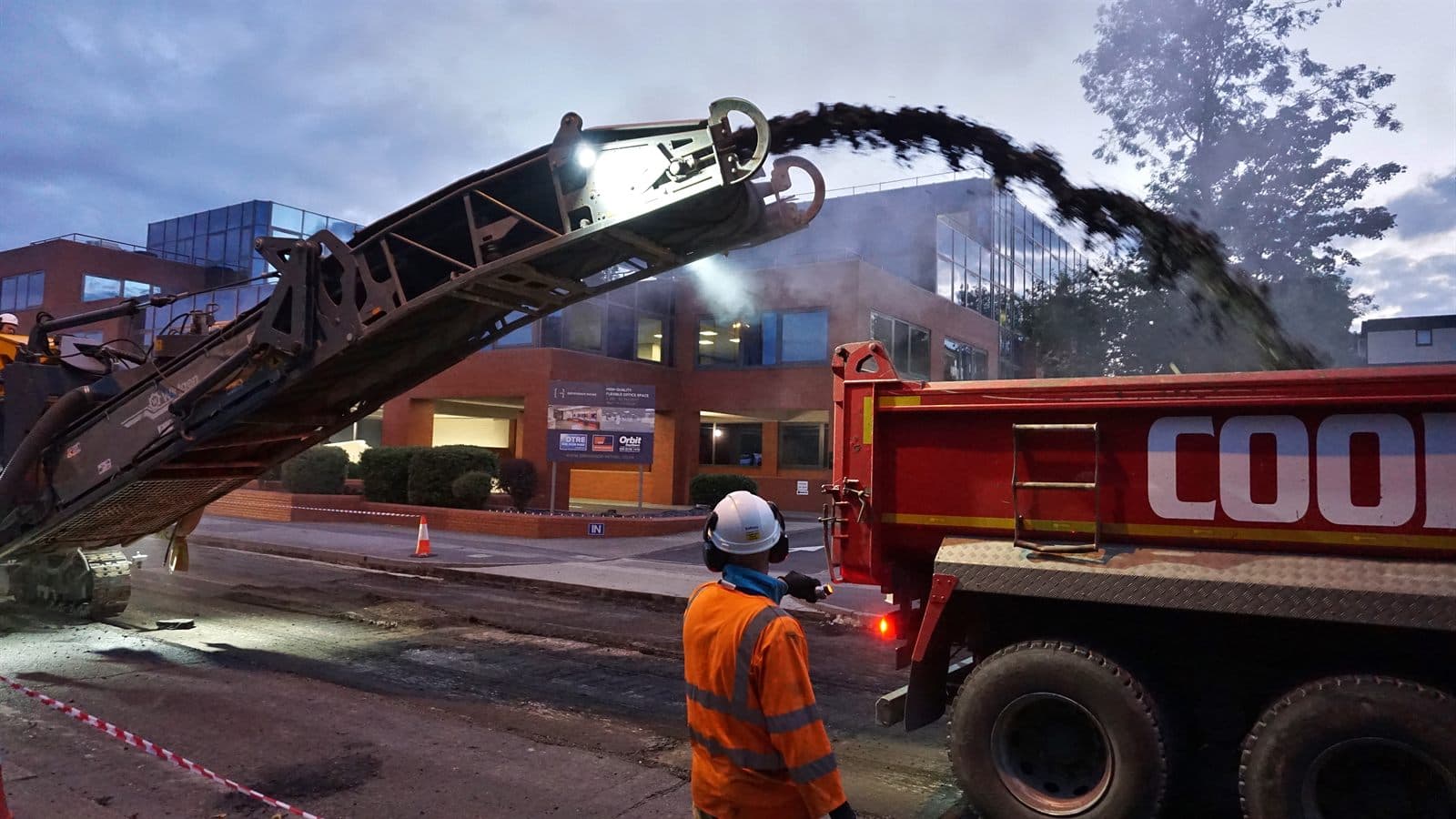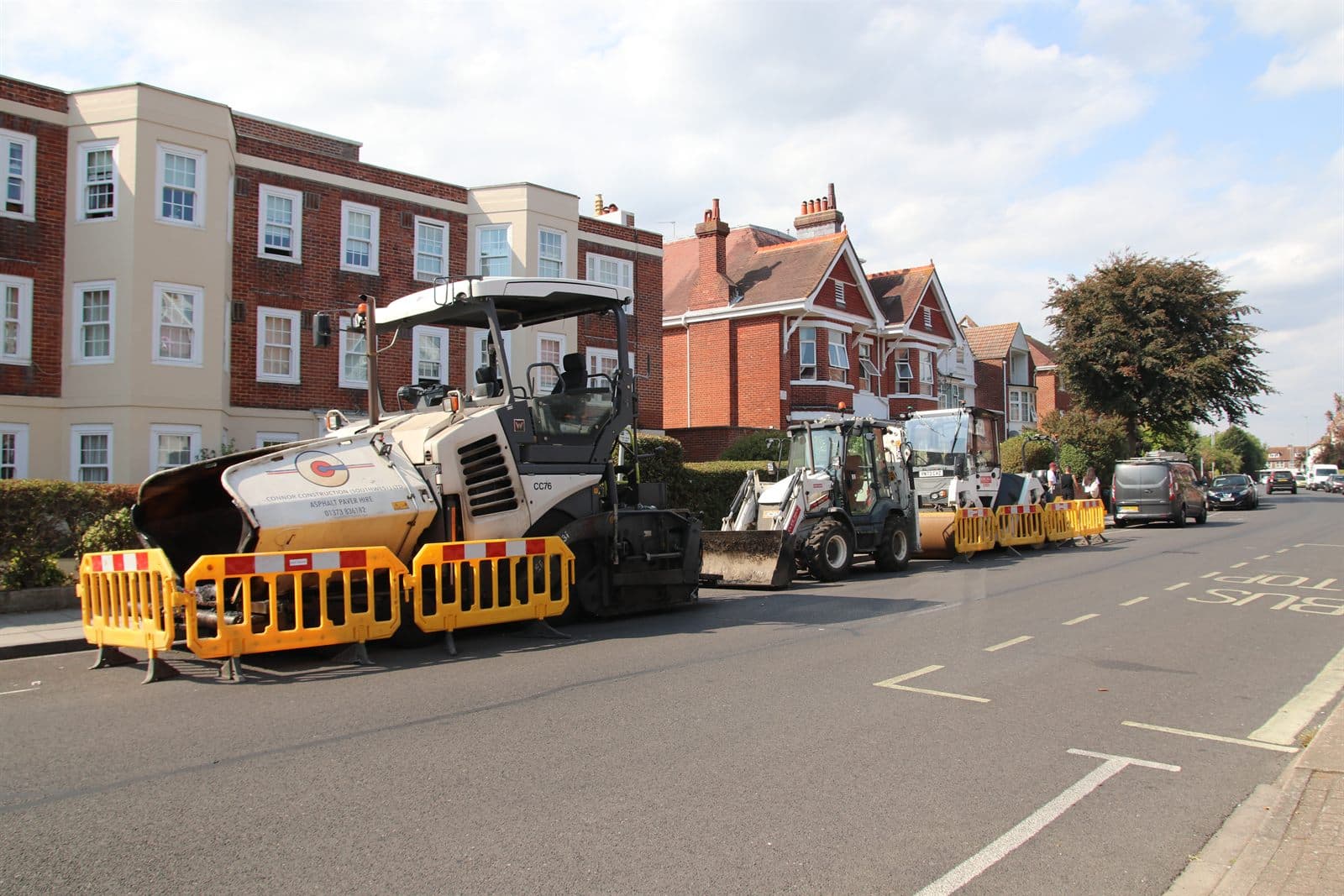
New gear gets the headlines. Fair enough — a machine that cuts, cleans, and speeds a repair is easy to photograph. But longevity lives in the details: the material in the hole, how it bonds, how it handles heat and freeze, and whether the patch is still sound two winters later.
Oxfordshire County Council and contractor M Group put that idea to a real test. After a harsh winter spike in defects, they closed Wildmere Road in Banbury and divided a 700-metre stretch into sections. On that single corridor they trialled 15 different pothole and patch methods — some already in use locally, others new technology sourced by M Group.
It was the council’s second innovation event of this kind, after a 2023 trial in Steventon with seven methods. This time the scale was larger, and the monitoring plan is serious: regular checks over about two years, comparing repair type, equipment, material, labour, time, longevity, waste, carbon impact, recycled content, and productivity.
Winter pressure made the case for testing
Oxfordshire’s winter backdrop was brutal. A prolonged freeze followed by extended rain drove emergency reports up sharply. The council was receiving more than 1,000 reports a week at peaks, topping 1,300 defects in a single week in early March. Crews expanded from seven to 25. Specialist kit — including a Bobcat planer, Dragon Patcher, and thermal road repairs — came in to cut the backlog.
Since January 2026, M Group repaired more than 33,000 highways defects, against 37,042 potholes filled across the whole of 2024–25. Volume alone doesn’t fix the network. Better methods do.
Councillor Liz Leffman framed the trial as a value-for-money exercise across a 3,000-mile road network: test what’s new, keep what works, drop what doesn’t. Richard Lovewell of M Group stressed adapting techniques for wetter winters and hotter summers — exactly the climate squeeze many UK authorities feel.
Machines are only half the toolkit
Elsewhere in England, councils are debating and trialling equipment such as the JCB Pothole Pro. Suffolk began a trial after the machine became available on free loan. Leicestershire has revisited it after earlier questions about economics. Norfolk and other authorities have also been part of the wider conversation. JCB says a typical site can be prepared in about eight minutes before a conventional crew completes the patch with hot asphalt. Results vary by network: dense urban grids behave differently from scattered rural defects that need nimble moves between sites.
Spray-injection patching has also scaled. Velocity Roads Group reports repairing around 750,000 defects per year with a process that cleans with compressed air, seals with emulsion, and compacts coated aggregate from the bottom up — often traffic-ready quickly and useful for preventative find-and-fix work on unclassified roads.
Those stories matter. They show UK local government is hungry for productivity. They also underline a quieter truth: cutting and cleaning a defect faster still leaves you choosing what goes back in — and how that fill behaves through the next two winters.
What councils should ask while they compare methods
Oxfordshire’s two-year monitoring list is a strong template. Longevity and carbon aren’t side notes; they’re the scorecard. When you evaluate materials alongside machines, ask:
- Does the product bond to existing asphalt (and concrete where needed) without a separate tack step?
- Can crews place it in damp conditions when the calendar won’t wait?
- Is it traffic-ready immediately, or does reopen time eat the productivity gain from the machine?
- Is it thermally resilient when summer heat and winter freeze both hit the same patch?
- Can it be stockpiled so surge crews aren’t waiting on fresh batches?
EZ STREET® Ambient® asphalt answers several of those questions for agencies building a modern materials palette. It’s engineered, performance-proven ambient asphalt technology — ready to use, cost-efficient for highways through driveways, and enduring when placed correctly. It works in water. It offers superior bonding to asphalt, concrete, and itself. Throw-and-go application means no mixing and no tack required. Stockpiling for months without degradation supports the kind of surge capacity Oxfordshire needed when reports spiked. Available in bags for small repairs and by the ton for larger programmes, it fits both reactive fills and planned patching trials.
Councils comparing longevity shouldn’t treat equipment and materials as separate debates. A fast cut with a short-lived fill is still a callback. A slower prep with an enduring, thermally stable ambient asphalt can win on whole-life cost.
The Banbury takeaway
Wildmere Road will teach Oxfordshire which combinations hold up. Other authorities can borrow the mindset now: run fair comparisons on one stretch, measure more than speed, and keep an open door to engineered ambient options like EZ STREET Ambient alongside planers, spray-injection, and specialised patchers.
Pothole strategy isn’t machines versus materials. It’s machines and materials — chosen together, tested honestly, and scored on how long the road stays smooth for the people who pay for it.
Source notes: Oxfordshire County Council methods trial; BBC Suffolk Pothole Pro; Open Access Government / Velocity spray-injection; ezstreetasphalt.com/what-is-ez-street Cover photo: Tim Sheerman-Chase, CC BY 4.0.