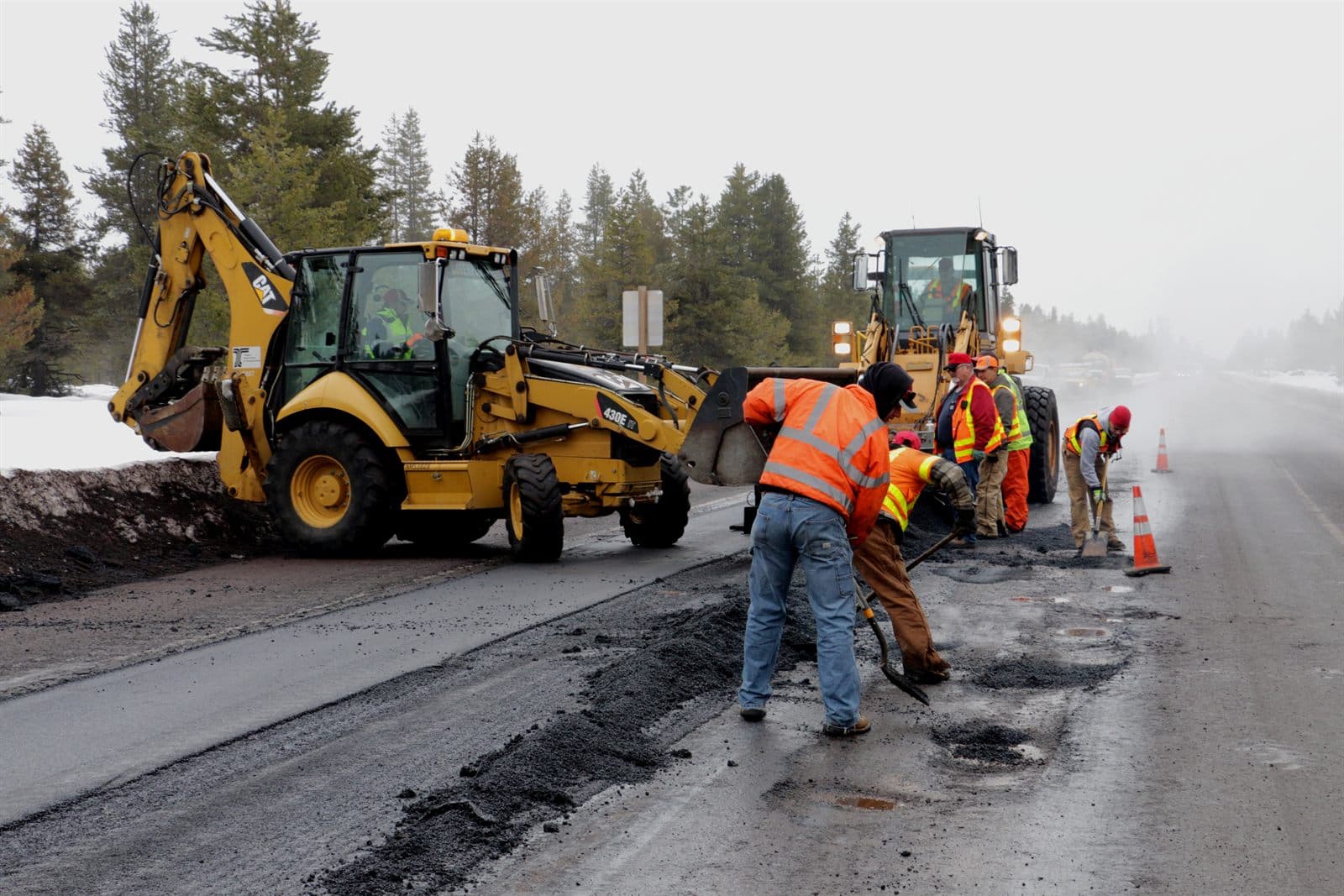
Some winters don’t just leave snow. They leave a map of craters.
Canada’s freeze-thaw cycles are a masterclass in pavement stress. Water enters a crack, freezes, expands, weakens the surface, then melts and invites the next round. Do that enough times under traffic, and you’ve got the kind of holes that empty wallets and patience.
Two 2026 stories capture the mood. In Alberta, frustrated residents didn’t wait for another press release. Businessman Mohamed Tarrabin and about 80 construction-experienced volunteers filled roughly 200 potholes on a two-kilometre stretch of Highway 63 south of Fort McMurray in mid-June — a planned protest with RCMP traffic control. Locals had described southbound lanes with holes around 15 centimetres deep. Tarrabin said vehicle damage after hitting craters had run about $10,000 on one of his SUVs. Alberta Transportation noted its contractor had completed about 120,000 kilograms of pothole repairs in the urban service area since April 1, much of it overnight, with more paving planned.
Farther east, Montreal’s season told a funding-and-weather story. Officials reported 3,824 pothole-related complaints between January 1–27, 2026 — nearly five times the 796 logged in the same period a year earlier. Environment Canada recorded at least 17 winter days with temperatures swinging above and below zero. Pavement researchers pointed to maintenance shortfalls layered on top of harsh cycles. A 2021 CAA-Québec estimate put poor-road vehicle repair costs for Quebec motorists at about $258 a year — more than double the national average at the time. The city planned roughly $684 million on roadwork in 2026, and had repaired 103,026 potholes through private contracts in 2025.
Different provinces. Same physics. Same public frustration when fills don’t keep up with the climate.
Why freeze-thaw punishes weak repairs
A patch that doesn’t bond, sheds under wheel load, or softens and ravels when temperatures swing becomes a second defect. Agencies need materials that stay workable when windows are short, bond without elaborate prep, and remain thermally resilient when January can’t decide whether it’s thawing or freezing.
Property managers and homeowners feel a smaller version of the same problem on driveways, alley aprons, and parking lots. You can’t control the provincial highway budget. You can control the hole outside the loading dock before someone twists an ankle or claims a tire.
DIY / small-site how-to with bagged ambient asphalt
EZ STREET® Ambient® asphalt is available in bags for small and DIY-scale repairs, and by the ton when a site grows. It’s ready-to-use, performance-proven ambient asphalt technology — no mixing, no tack coat, throw-and-go. It bonds to asphalt, concrete, and itself; works in wet conditions; and is instantly ready for traffic after proper placement. Stockpiling for months without degradation is handy for facilities teams who want material on the shelf before spring break-up.
Here’s a practical sequence for a driveway or parking-lot hole:
- Mark and clean. Sweep out loose rock, dirt, and failed asphalt. If water is pooled, broom or pump what you can; it’s formulated to work in wet conditions, but removing standing sludge still helps the pack.
- Square the edges if they’re fretted. A cleaner edge gives the new material something solid to key against. Keep the hole’s depth consistent where possible.
- Pour and place. Open the bag and fill the defect slightly above grade to allow for compaction. No bonding agent required.
- Compact in lifts if the hole is deep. Use a hand tamper or plate compactor. For driveways, a car tire rolled carefully over the patch can help for shallow repairs after initial hand tamping.
- Feather the edges. Blend the repair into the surrounding surface so tires don’t catch a ridge.
- Open to use. The repair is traffic-ready immediately — one reason facilities crews like engineered ambient asphalt for overnight or weekend work.
For larger lots, stage bags near chronic failure spots (drain lines, entrance radii, dumpster pads). Thermally stable performance across seasons means you’re not waiting on a perfect paving day to knock down trip hazards.
What communities and crews can take from Alberta and Montreal
Citizen fill-ins on a major highway aren’t a long-term maintenance model — and Alberta’s legal framework treats unauthorised highway work carefully. They are a signal: people will act when they feel the network isn’t keeping up. Montreal’s complaint spike shows how fast freeze-thaw can overwhelm even a big-city response if foundations and funding lag.
The constructive path is better programmes and better materials. Enduring, traffic-ready fills — including EZ STREET Ambient for both agency stockpiles and bagged site work — help close defects before the next thaw opens them wider.
Whether you manage a provincial corridor or a 40-stall parking lot, the physics don’t care about your org chart. Water, freeze, load, repeat. Answer with a repair that bonds, holds, and gets traffic moving again the same day.
Source notes: Calgary Journal / CP — Alberta Hwy 63 protest fill-in (Jun 2026); Global News — Montreal freeze-thaw / funding (Feb 2026); ezstreetasphalt.com/what-is-ez-street Cover photo: Oregon Department of Transportation, CC BY 2.0.